Currently Empty: 0R.S.


The art of questioning: How to put your old beliefs on trial to free yourself from them?
17 April، 2026

Have you ever considered that the idea you most defend might be an idea you didn't choose in the first place?
I am writing here to convince you of a new conviction. I want us to pay attention to something important: automatic conviction. This conviction passes quickly through our minds.
The art of questioning is not hostility towards thought. Rather, it is a step towards intellectual independence. It begins with self-reflection and conscious choice.
Instagram is an example of how information is controlled. Before we see the content, we are faced with a registration portal. This shows that knowledge is not always readily available.
In the public sphere, a significant example is the events of October 7th. These events, particularly those from Gaza, changed the convictions of many. Alternative media and social media played a crucial role.
The basic idea is: before you say “I am convinced,” think “I have investigated.” This distinguishes between repeating an opinion and building understanding.
Key points
- Doubt is a daily skill that helps you stop impulsively before taking a stand.
- Critical thinking begins with two questions: Why did you believe it? And how did you verify it?
- Self-reflection separates your identity from your thoughts, and reduces blind attachment.
- Intellectual liberation does not mean rejecting everything, but rather a conscious choice based on examination.
- Platforms like Instagram remind us that content passes through algorithms and bubbles, not through “raw reality”.
- Developing a mindset is strengthened when you test your sources of information, not just when you collect them.
Why do we need the art of questioning in the age of information overload?
In Saudi Arabia, information flows rapidly. We receive notifications, videos, and new ideas quickly. This makes it difficult to distinguish between what we know and what we receive.
Critical thinking is an essential skill. It helps us reflect before making quick decisions. This prevents us from rushing into decisions.
How do we reach the right decision? Information may come with explanations. However, we rush to publish. This makes it difficult for us to distinguish between what we believe and what we receive.
When we learn to analyze ideas, we begin by asking questions. Is the source reliable? Have we understood the event well, or have we simply adopted a position? This helps us improve our decisions.
How do alternative media and social media affect us? Platforms like Instagram have become very important. Everything we see passes through a digital identity, not through a neutral window.
Algorithms influence what we see. We find that "everyone" sees the same image. This requires critical thinking and analysis.
| Daily scene | How is bias created? | A practical question of doubt | Its impact on improving decisions |
|---|---|---|---|
| Fast trend with definitive statements | A complex topic reduced to "true/false" | What does the title not say? | Reduces impulse decisions |
| Short clips with moving music | The sense of evidence is linked to the lack of verification. | Do I have information or just an impression? | Increased clarity of priorities |
| Reposting within WhatsApp groups | It adds social pressure to agree | If I don't participate, does the right change? | It protects relationships from stress |
| An algorithm that displays what "suits me". | Repeat the same angle and hide the alternatives. | What is the opposing view that I do not see? | Opens new options |
Healthy skepticism is neither mockery nor nihilism. Healthy skepticism helps us understand better. Ridicule attacks us, while ignorance leaves us without direction.
Using thinking skills makes them a part of our lives. This helps them transition from anxiety to calmness. Every little question helps improve our decisions.
Skepticism is not a destruction of values, but rather a preservation of reason.
I don't want you to misunderstand your values. I want you to think about Your interpretation For her. We often disagree because of differing understandings of values.
Are you truly building “justice” in your life, or just following an outdated image of it? This begins the journey of self-evaluation.
In a world overflowing with news, the meaning of words is constantly shifting. We hear about "interest," "security," and "wisdom," but each side interprets them differently. This highlights the importance of reflecting on values.
Doubt is a way of maintaining the mind. It helps us understand values accurately, without abandoning them.
Reality is sometimes clearer than what we hear. When we see systematic extermination on television, we can see the truth. Skepticism here supports justice and compassion.
Doubt shows that we can change our ideas without losing our dignity. This is intellectual liberation. It demonstrates the importance of admitting mistakes in self-improvement.
Doubt is part of the learning process. It opens the door to understanding facts rather than justifying them.
Skepticism is like scientific research. It requires supervision, preparation, documentation, and then review. This is a step towards making better decisions.
| Angle of view | Chinese skepticism | Destructive skepticism |
|---|---|---|
| The relationship of the idea to values | It protects value and calmly tests its interpretation through self-evaluation. | He confuses the value with human errors in its application. |
| How to deal with media narratives | It deconstructs claims and seeks documentation and contextual consistency. | He quickly rejects everything and replaces analysis with sarcasm. |
| Impact on developing mentality | It increases cognitive flexibility and turns mistakes into repeatable lessons. | It creates inner hardness and mental fatigue with repeated frustration. |
| The outcome in relationships | It allows for changing one's opinion without losing one's identity and supports intellectual freedom. | It pushes towards confrontation and makes admitting fault seem like a defeat. |
| This relates to self-development | It builds better decision-making habits: question, provide evidence, then modify behavior. | Learning stops at the point where “everything is corrupt.” |
Critical thinking, self-reflection, getting rid of illusions, intellectual liberation.
In our daily lives in Saudi Arabia, we hear a strong opinion in a gathering, or read a persuasive post. Then we act as if it were true. This is where our role begins: to slow down and return to basic principles.
Critical thinking is not about complexity or constant skepticism. It's a way of organizing information before it enters our decision-making process.
A practical definition of critical thinking in your daily life: from “believe” to “test”.
I approach critical thinking as a single question. Instead of "Do I like what I'm saying?" I ask, "How can I test it?" I test it by comparing two sources, by asking a specialized question, or by a small, safe experiment in my life.
Even in the simplest things, like health advice or a purchasing decision, testing protects me from being swayed. The idea isn't that I reject everything, but that I ask for evidence and separate impressions from facts.
Self-reflection as a habit: What do I believe? Why? And what is the evidence?
Self-reflection becomes easier when it has consistent questions. Sometimes I write them down in my notes: What do I believe? Why do I believe it? What is the evidence? And what is the counter-evidence?
In this way, I am neither attacking myself nor justifying myself. We are simply reviewing our thought process, seeing where emotion interfered and where factual information was lacking.
| Self-reflection question | How can I apply it quickly? | A practical signal that helps me |
|---|---|---|
| What exactly do I think? | I transform the idea into a single, testable sentence. | to set Common words like “always” and “impossible” |
| Why do I think so? | State the reason: experience, a trusted source, or repetition on social media. | Identifying the motive: fear, belonging, or desire for reassurance |
| What is the evidence? And what is the counter-evidence? | Gather two examples that support and two examples that oppose. | Refer to documented data or experiences instead of a single story |
| Who benefits from this belief? | I'm thinking about the interest: marketing, group, or self-image. | Language note: Are you inciting me or explaining to me? |
Getting rid of illusions: How to distinguish between "psychological comfort" and "reality"
Getting rid of illusions doesn't mean I'm fighting hope. Rather, it means I'm distinguishing between what comforts me and what proves reliable. Sometimes a single narrative gives me quick meaning and eases my anxiety, but it's not necessarily accurate.
I ask myself: Did I feel comfortable because the idea was correct, or because it was simple and resembled me? This question alone opens up space for reality, even if it is a little disturbing.
Intellectual freedom: the ability to change one's opinion without losing one's identity
Intellectual freedom is revealed when I can change my mind without feeling I've betrayed myself. Identity isn't a single opinion; it's a way of learning, a way of engaging with evidence, and a way of respecting humanity.
I've noticed that shifts in consciousness often come gradually, like the accumulation of observations across time, events, and contexts, rather than a sudden, impulsive leap. The same concept of preparation and oversight in scientific research reminds us: maturation unfolds in steps, involving documentation, review, and then quiet adjustment. Here, self-reflection intersects with critical thinking, and shedding illusions becomes a practical path toward intellectual liberation.
Your old beliefs on trial: The method of putting ideas on trial
Sometimes I feel my old beliefs weighing me down. I start analyzing the ideas as if they were "accused" in a court of mind. This helps me understand the ideas without being influenced by them, and gives me an opportunity for self-evaluation.
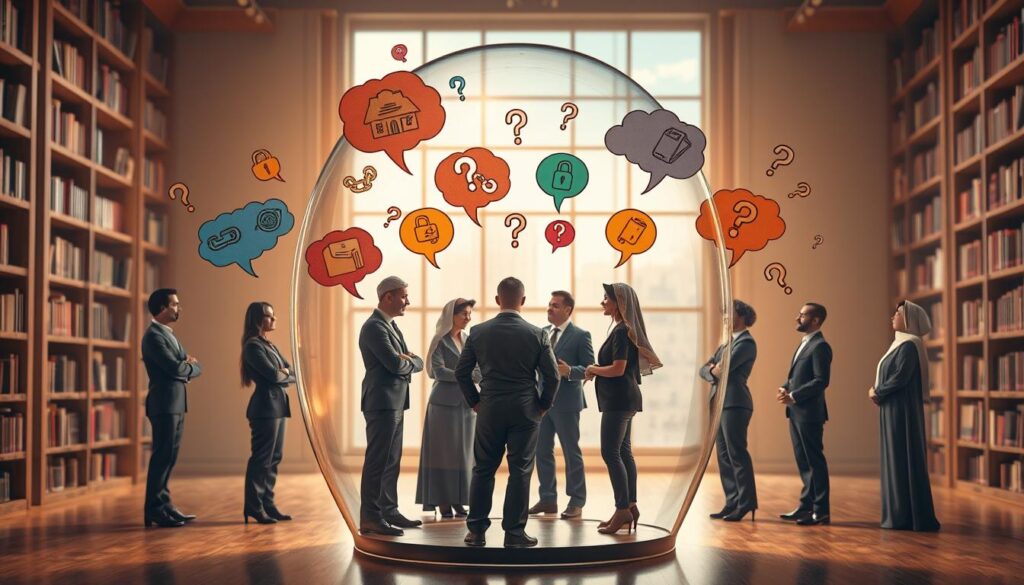
Before starting, I ask myself: Is this conviction useful to me today? Does it help me make better decisions? If the answer is unclear, then it is time to analyze the ideas carefully.
Drafting the “indictment”
I start by writing an “indictment” instead of speculating about behaviors. For example, instead of saying “I’m wrong,” I write, “This behavior makes me avoid confrontation.” This helps me understand how these beliefs influence my decisions.
Added impact: Where did it cause me to make a bad decision? Where did this conviction affect my relationship with others? This makes them a reality I can deal with, rather than just words.
Summoning “witnesses”
I call upon witnesses: personal experiences, statistics, or recurring observations. For example, scenes like the “documented scenes” in Gaza prove to us that there is a reality that can be seen. This develops our thinking skills.
In analytical observation, I listen to many opinions, such as those of Dr. Essam Al-Khawaja. My aim is to analyze the ideas rather than be influenced by them. This makes them deeper and more understandable.
The burden of proof principle
Sometimes I find it difficult to defend my convictions. In this principle, I put the conviction under the pressure of proof. If I cannot prove it, I consider it a tentative hypothesis.
By adopting this principle, I find myself less tense in discussions. This helps me improve my decision-making effectively: instead of justifying, I test and learn.
| trial step | A question I ask myself | A practical indicator in my life | Expected result on improved decisions |
|---|---|---|---|
| Behavioral indictment | What does this conviction do to me when I am stressed or in a hurry? | I avoid an important call, or interpret the comment as a personal attack. | Calmer, less impulsive choices |
| Summoning witnesses | What evidence is not dependent on my mood today? | A recurring observation, data, or documented scene undermines the generalization. | Decisions based on verifiable facts |
| Burden of Proof | Does conviction justify itself, or do I justify it? | If there is no evidence, write it as a hypothesis and leave the door open for modification. | Greater flexibility and faster learning with self-assessment |
| Testing alternatives | What is another explanation for the same event? | I compare two options before replying to or sharing news. | Reducing errors and improving communication quality |
How do we create a false belief and then defend it fiercely?
Sometimes we start lying with a simple act. Then we reinforce our defenses against that lie. This highlights the importance of critical thinking skills in correcting this behavior.
Self-reflection is essential before any discussion. This helps us understand why we defend a mistaken belief.
In self-development, our goal is not to argue. Rather, it's to understand why we cling to our beliefs. This helps us develop a mindset.
Identity and belonging: Sometimes we defend an idea because it shows us a sense of belonging. This explains why we defend it.
After October 7th, a new coordination emerged among the forces. This demonstrates how an idea can transform from an opinion into a network of relationships.
Self-reflection can be interpreted as a threat to unity. This highlights the importance of understanding the evidence rather than clinging to one's own opinion.
Fear of making a mistake: Confession is costly. In Saudi Arabia, holding one's opinion is interpreted as strength. This highlights the importance of the difference between strength and stubbornness.
In self-development, this distinction is important. Developing a mindset means adapting when the evidence changes. This highlights the importance of consistency with the evidence.
Selective memory: My mind loves to gather evidence that supports me. I remember successes more than failures. This shows how solid conviction can look.
An exercise that helps me: I write evidence against my opinion before writing evidence for it. This demonstrates the importance of critical thinking skills.
| Psychomotor | How does it appear in the discussion? | A practical question to calm the reaction | An early indication that conviction has become an “identity” |
|---|---|---|---|
| Identity and belonging | I defend the idea as if I were defending myself or my group. | Can I explain the idea without mentioning the group or its symbols? | I get more angry at criticism than I care about the validity of the evidence. |
| fear of making a mistake | Raise your voice or repeat the same point even if the information has changed. | What is the real loss if I say: I may be wrong? | I associate admitting a mistake with weakness or a lack of prestige. |
| Selective memory | I cite a few examples and ignore opposing data or experiences. | What is the strongest example that doesn't fit my current story? And why am I ignoring it? | I use “always/never” instead of specific numbers or cases. |
Analyzing thoughts: Simple tools for self-evaluation without self-flagellation
In times of stress, I find a calm way to clear my mind. Analyzing ideas is a daily skill, not a trial. It helps me improve my decisions without being hindered by stubbornness.
I learn critical thinking by asking questions like: Am I defending a fact or a feeling? This helps me reduce stress. It allows me to see ideas from a distance before they influence my behavior.
Breaking down the idea into a testable claim instead of a general statement
For example, saying “All media outlets are liars” is unhelpful. It’s better to say, “This channel made a mistake in reporting such-and-such on such-and-such a day.” This makes them less vague.
I then write down: What is the evidence? What is the source? Is there a correction? This helps in self-evaluation without self-flagellation.

Testing the alternatives: What is the other explanation? And which scenario is most likely?
I train myself to ask two questions: “What’s the second possibility?” and “Which scenario is most likely to happen?” For example, traditional media might be linked to the rise of social media.
This makes it easier to improve decisions. The more alternatives there are, the smarter and calmer the self-assessment becomes.
Distinguishing between “impression” and “information”: What do I really know? And what do I think?
On Instagram, “I feel like all the content is the same” is an impression. But “the platform requires login to access certain features” is information. This elevates the quality of thought.
I summarize the differences in short sentences. This makes it easier for them to analyze the ideas. Decisions are then based on what I know, not on expectations.
| The tool | Quick question I use | An example from our digital lives | How does improving decisions serve |
|---|---|---|---|
| Breaking down the general sentence | Can I mention a specific incident, date, or source? | Instead of saying “all media is misleading,” I say: “This channel made a mistake in a particular news item and did not correct it.” | Generalization reduces oversimplification and leads to more nuanced action, such as changing one source instead of rejecting everything. |
| Testing alternatives | What is the other, less dramatic explanation? | The decline of traditional media may be linked to the rise of social media and the ease of access to videos and documents. | It expands options and prevents hasty decisions based on a single interpretation. |
| Separating impression from information | Is this a feeling or a verifiable fact? | “The content is similar” is an impression, and “Logging in changes the experience” is information. | It increases the accuracy of the assessment and ensures that the decision is based on verifiable data or observation. |
I don't review myself to find out I'm wrong; I review myself to live with greater awareness and reduce my mistakes without being harsh.
Lessons from the public sphere: How do major events change the consciousness of societies?
Sometimes, public opinion begins as a spark and then transforms into habits. Here, I observe how we think about these shifts. How do we perceive them without exaggeration? And how do we learn to cultivate a mindset amidst images and headlines?
After October 7th, we witnessed a significant development in solidarity in Europe and the Americas. This solidarity went beyond traditional support; it came to support the Palestinian national liberation struggle against Zionist colonialism.
We cannot dismiss this image as mere news. We need to analyze the underlying ideas. What has truly changed? And what remains a fleeting sentiment?
When we reflect on this, we discover why awareness becomes behavior. We discover how language transforms from empathy to explicit demands.
From fleeting protest to institutional structure: How solidarity transforms into organization
Solidarity after October 7th was no longer merely a protest action. It transformed into an institutional structure. We are witnessing the emergence of new frameworks for coordination and the rise of established coordination mechanisms.
This shows that developing a mindset isn't just a nice idea. It's the ability to translate conviction into plans and roles.
I consider this an exercise in thinking skills. What is the objective? Who is responsible? And how do we evaluate the results?
By this logic, organizing becomes a natural extension of consciousness, not merely repeating a slogan or sharing a post.
The decline in the influence of traditional media and the rise of social media as a primary source of information
Traditional media is losing its influence, while social media is gaining ground. It has become the primary source of information. This demonstrates that the most powerful source is not always the most accurate.
In Saudi Arabia, we see this shift daily. A short clip might precede any lengthy report. Therefore, I return to a simple rule: What is the context? What is the evidence? What do I see and what do I conclude?
The "University Uprising" as an example of shifts in consciousness among youth and students
The shift in sources of knowledge is evident in universities. The “university uprising” demonstrates how young people are thinking more clearly. They are testing the limits of official discourse and freedom of expression.
Here, thinking skills emerge as an everyday tool. How do we disagree without dismissing the other side? And how do we maintain critical thinking?
| axis | What has changed in public consciousness | Behavior that appears on Earth | A question that helps in analyzing ideas |
|---|---|---|---|
| From protest to institution | The transition of solidarity from a moment of anger to organized action | New frameworks for coordination and established institutional coordination mechanisms define activities. | What is the next step after the expression? And who coordinates it? |
| Traditional media and social media | The decline in the influence of traditional media and the rise of social media as a primary source of information | The public's reliance on alternative media and social media as a driver of the masses | Is the information documented? Or is it just circulating? |
| Universities and youth | The shift among students accelerated as visual evidence accumulated and narratives clashed. | Protests, debates, and demonstrations both inside and outside the university campus | Is my position based on evidence or on a collective identity? |
Thinking skills that prevent you from falling into the "one-narrative" trap
The trap of "one narrative" visits us every day. It appears in politics, self-development, relationships, and work. One seductive story summarizes everything and soothes the mind.
But sometimes it blinds. Thinking skills are important here. I pause for a moment and ask myself: Do I understand the whole picture or am I only grasping one part of it?
In Saudi Arabia, the abundance of mobile content makes you quickly adopt a pre-packaged interpretation. I treat critical thinking as a daily habit. I look for a second interpretation before making a judgment.
I ask myself: What was left unsaid? And who benefits from me believing this particular story?
The logic of the “third source” This illustrates an important point. When we have a clear value framework, it becomes easier to interpret events without distortion. However, a value framework alone is not enough; it must be accompanied by tools for research, comparison, and documentation.
This type of mindset development reduces the likelihood of us becoming trapped within a single narrative, because we return to the standards before the hype.

The first step: Compare traditional and alternative sources. This doesn't mean one is "right" and the other "wrong." Each has its own perspective and language.
Comparison reveals the difference between "documented information," such as a number, document, or recorded statement, and "opinion pieces" that merely promote an idea without evidence. This distinction changes how we improve decision-making at home and at work.
I love two questions that expose marketing: Who has the ability to document? And who has the ability to market? Sometimes one party has cameras and data, and sometimes one party has campaigns and a louder voice.
When I separate the two, I have more room to judge instead of rushing to the conclusion that is more widespread.
I borrow the spirit of academic research: just as you prepare and revise a "memorandum," we conduct an "internal discussion" of our convictions. I write the claim in a short sentence, then gather evidence for it, and then look for its refutation.
This is a simple exercise in critical thinking. It makes developing a mindset a process, not just a slogan.
| skill | How can I apply it quickly? | A question that opens a new perspective | Its impact on improving decisions |
|---|---|---|---|
| Comparison between sources | I read a news report from a traditional source, then review alternative coverage of the same event and note the differences. | What did each source focus on, and what did it ignore? | I reduce haste and form a broader picture before any stance or engagement. |
| Distinguishing between the documented and the opinion | In the text, I identify: numbers, documents, recordings, versus descriptions and impressions | Is this a verifiable claim or just an interpretation? | I raise the quality of judgment and avoid decisions based on momentary enthusiasm. |
| Documentation vs. Marketing Check | I am looking for: Who published the information first? And was it documented or just repeated? | Is the strength here in the evidence or in the dissemination? | I protect myself from misleading advertising and the "easy story". |
| Internal discussion of conviction | Write the idea in one sentence, then add to it: supporting evidence, opposing evidence, and a third explanation. | If I were wrong, what would be the first sign that would reveal that? | I make thinking skills a habit, and I build flexible, adaptable decision-making. |
Getting rid of common illusions in self-development and improving decisions
Sometimes we follow advice without scrutiny. This is the first step towards dispelling illusions. Dispelling these illusions opens up space for self-evaluation.
In Saudi Arabia, we hear a lot about alternative medicine. Some of it is beneficial, but other treatments need evidence. Before we get better, we must explore the evidence and the risks.
The illusion of certainty: Why feeling confident doesn't mean you're right
Confidence may come from repetition, not from the validity of the idea. When we repeat a message too often, we take it as proof. This weakens our ability to self-assess.
To get rid of this illusion, I ask myself: Can this idea be tested? And will I remain strong if the results are reversed? This helps us improve our decisions instead of relying on feelings.
The illusion of experience: when "I've tried it" becomes a general judgment on everyone.
Experience is important, but we shouldn't confuse it with a general rule. This illusion deceives us and makes us consider our experience as universal wisdom. In self-development, we must distinguish between personal experience and a general rule.
We need to separate experience from the claim of generalization. This helps us to assess ourselves accurately. We seek documentation and learn from different circumstances.
The illusion of good intentions: How we deceive ourselves into thinking that a noble goal justifies a weak idea
Sometimes we consider an idea acceptable because it is "humanitarian" or "considerate of people." But good intentions don't justify a weak idea. We must seek evidence and analyze it so we are not deceived.
In alternative medicine advice, someone might say, “I mean to help you.” That’s great. But we need to explore the mechanism, the evidence, and the potential side effects. This helps us to accurately dispel any misconceptions.
| illusion | A sign that appears in everyday life | A quick self-assessment question | Its impact on improving decisions |
|---|---|---|---|
| The illusion of certainty | I feel very confident because the idea is widespread and repeated. | What is verifiable evidence beyond mere repetition? | Impulsiveness increases and risk assessment decreases. |
| They are the experts | I turn one experience into a rule for everyone | Is this a circumstantial experience or a result that can be generalized? | It offers ready-made solutions that don't suit people's differences. |
| The illusion of good intentions | I accept a weak idea because its goal seems noble. | Is the idea strong even if you disregard the intention of its originator? | It justifies inaccurate decisions and masks weak analysis. |
A practical plan for self-reflection in Saudi Arabia: From idea to behavior
I prefer realistic plans, not just ideas. In our busy lives of work and home, we need to easily reflect on ourselves. This helps us develop ourselves and improve our decisions daily.

Diary of Convictions
I spend 10 minutes each week writing down what motivates my decisions. I explore my beliefs about work, home, and health. I ask myself: Are my decisions based on clear evidence or just mood?
This exercise opens my eyes to the reasons behind our behaviors. It makes self-reflection a part of our daily lives.
To make self-reflection effective, I add a line to each conviction. I ask myself: Is the decision repeatable? This shows how we can improve our decisions.
Impact scale
I use short questions to measure the impact of beliefs. I ask myself: Does this belief improve my sleep or reduce my stress?
If the answer is “yes,” then it’s a helpful belief. This aids in self-development.
If a conviction gives me reassurance but then leaves a heavy burden, I subject it to self-evaluation. This protects my decision-making from being swayed by a fleeting feeling.
safe small experiments
I'm trying one step at a time to test one belief rather than change my life. If I'm convinced that "argumentation always causes problems," I'll try a calm conversation. My goal is to understand the point, not to win.
This experience is like a small laboratory. Its results are clear from any internal debate. This makes it part of our routine.
To make the experience more structured, I proceed in three stages: writing down my expectations, having someone I trust supervise, and then reviewing what happened. This way, self-reflection becomes part of our routine.
Intellectual freedom without conflict: How to discuss and change your mind with minimal social damage?
Intellectual freedom doesn't mean breaking people around us. It's a daily skill. We can express our opinions without hurting others, and listen without becoming judges.
By using thinking skills, we reduce stress. We use dialogue to improve decisions, not to challenge.
In Saudi Arabia, a hasty discussion can increase tension. So, I start with the goal: understanding, not winning. This makes them more receptive to change.
I may be wrongThis is a sentence that opens the door for discussion. Send a clear message: “Let’s review the idea together.”
I always try to link my words with the question: “What could change our minds?” This helps in developing the mindset.
Before disagreeing, I look for common ground. I ask: "What do we agree on in the first place?" Such as security, health, justice.
After that, I can calmly present my disagreement. I say: “We may disagree on the method, but we agree on the goal.”
This approach reminds me of real-life lessons. Different groups can cooperate when they agree on common ground.
The same idea works with colleagues or relatives. Agreeing on the "principle" reduces tension and makes disagreements easier.
| A common position in the debate | A response that raises tension | A response that reduces stress and strengthens thinking skills |
|---|---|---|
| A discussion in the family council about a sensitive topic | You're wrong and it's clear you don't understand. | Maybe I'm misunderstanding it; let's first decide what we agree on. |
| Difference in working towards a quick decision | Don't complicate things, my opinion is correct. | Our goal is to improve decisions; what data do we need before we adopt the option? |
| Argument in a WhatsApp group over a circulating news item | That's definitely true because everyone is talking about it. | Let's distinguish between an impression and a piece of information; what is the source and does it include a number or context? |
In protecting relationships, I draw a clear line. If the discussion becomes a matter of proving who is stronger, I choose to remain silent.
I say, “Let’s stop now and come back to it another time.” This is a smart decision that serves to develop the mindset.
The result I see: intellectual freedom is easier with critical thinking skills. We change our minds with dignity, and we maintain goodwill.
We are taking a steady step towards improving decisions, without losing people.
Summary
I'm looking for someone who questions everything. I want someone who knows when to trust and when to test. Critical thinking is important here.
It's considered self-criticism, but it's a smart way to protect your decision. In an information-saturated age, verification is essential.
With the rise of social media and alternative media, verification has become a daily necessity. Many convictions come quickly, and we then call them "our opinions." Self-reflection can stop this drift.
Simply ask: Where did the idea come from? What is the evidence? Getting rid of illusions is easier if we judge the idea instead of defending it.
Intellectual freedom comes with this. I can change my mind without losing myself or losing people.
If you were in Saudi Arabia, here's a simple step this week: Choose one belief, and write two pieces of evidence for it and two pieces of evidence against it.
Then try a small behavior that tests it in your life. If your opinion changes, that's not a loss; it's growth.


Hank1806
https://shorturl.fm/RXzuE